I recommend this site for everyone of any age.
Sunday, August 28, 2005
Jigsaw Zone: Jigsaw Puzzle Gallery
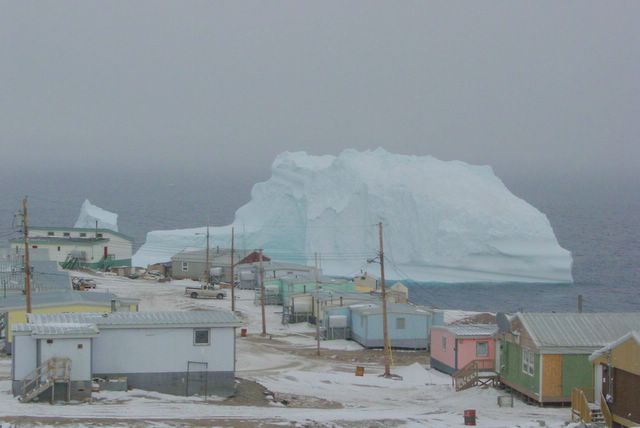
This is a great place to go when you are stuck in a small house during a raging arctic blizzard. All kinds of jigsaw puzzles to keep you entertained. Some of the pictures used for the puzzles are quite stunning.
I recommend this site for everyone of any age.
I recommend this site for everyone of any age.


Sunday, August 21, 2005
Late Summer Golfing
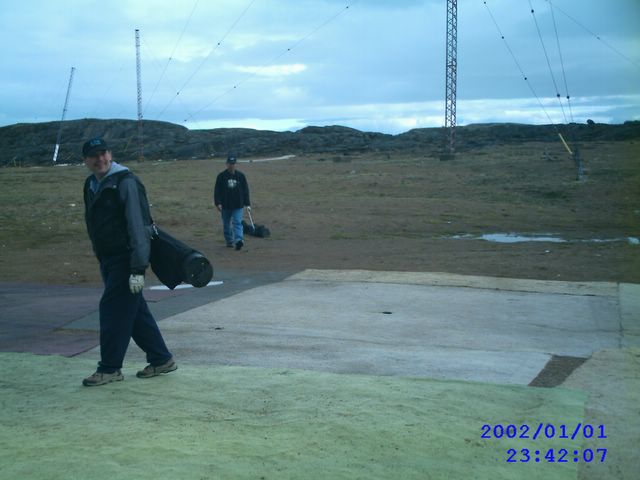
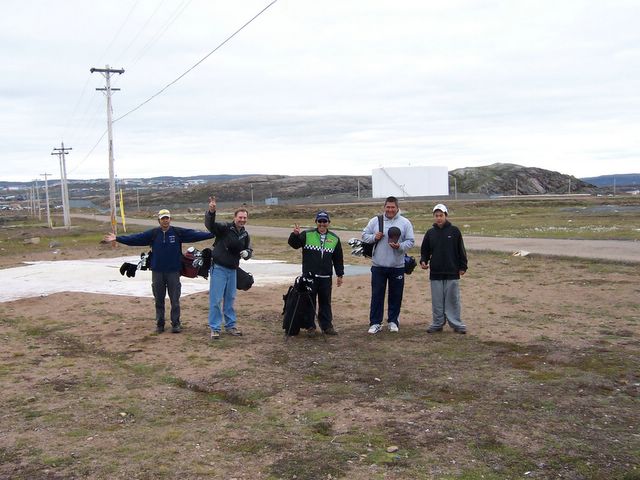
The days of endless sun are over. Tundra golfing is getting harder to do every day now. After a long day at work, I try to get out on the course but I have to cook for the kids and get my daily chores done first. This leaves little time to golf. We still go out for a nine hole round but it is not unusual to have to get some light on the greens near the end of the game. Usually I will pull up the van and put the high beams on. It helps. It is not unusual for someone to hit a drive and wait to see if we can hear where it lands. Really.
THe ground is getting harder as the nights get cooler. Today's high of +8C and clear skies may have been the last warm day of the year.
The tundra golfers will continue to play even when the temperature dips below freezing. Even when there is an inch of snow on the ground. Even when herds of caribou overtake the course. There is a limit though. The days will not offer any sunlight after 5pm shortly.
The weekends will be colder and colder. The snow will build up in September. It will become impossible to play. Then I will have to put away my clubs and get back to work for the winter. A very long and very cold and very dark winter. A very golfless winter.
I guess that I will have to spend time snowmobiling and ice fishing.
I will have to look forward to the ice golf season in the spring.
Perhaps I could fly south and play a few rounds. It would not be the same unless I land in the rough every drive.
Hey! What am I talking about? There is still lots of time to get many games in. I will get pictures and post them. I will share this insanity with the world. Why not? I am so privledged to live in a place where one can do what ever one wants. The land is wide open and the air is clean. No overpopulated urban centers. No green fees.
No Green Fees.
Cool.
THe ground is getting harder as the nights get cooler. Today's high of +8C and clear skies may have been the last warm day of the year.
The tundra golfers will continue to play even when the temperature dips below freezing. Even when there is an inch of snow on the ground. Even when herds of caribou overtake the course. There is a limit though. The days will not offer any sunlight after 5pm shortly.
The weekends will be colder and colder. The snow will build up in September. It will become impossible to play. Then I will have to put away my clubs and get back to work for the winter. A very long and very cold and very dark winter. A very golfless winter.
I guess that I will have to spend time snowmobiling and ice fishing.
I will have to look forward to the ice golf season in the spring.
Perhaps I could fly south and play a few rounds. It would not be the same unless I land in the rough every drive.
Hey! What am I talking about? There is still lots of time to get many games in. I will get pictures and post them. I will share this insanity with the world. Why not? I am so privledged to live in a place where one can do what ever one wants. The land is wide open and the air is clean. No overpopulated urban centers. No green fees.
No Green Fees.
Cool.
Thursday, August 04, 2005
A day in Pangnirtung
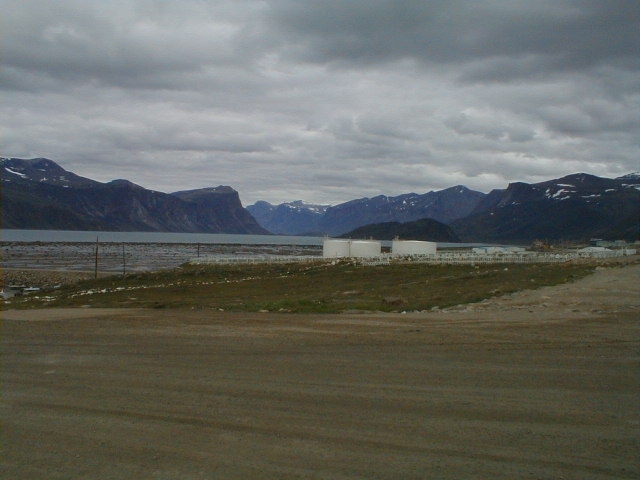
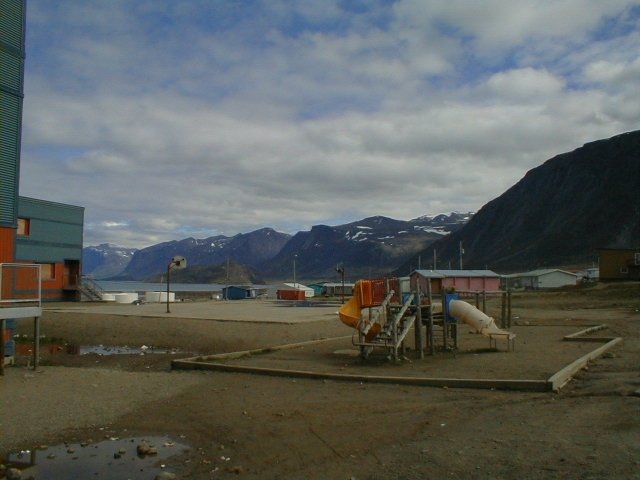
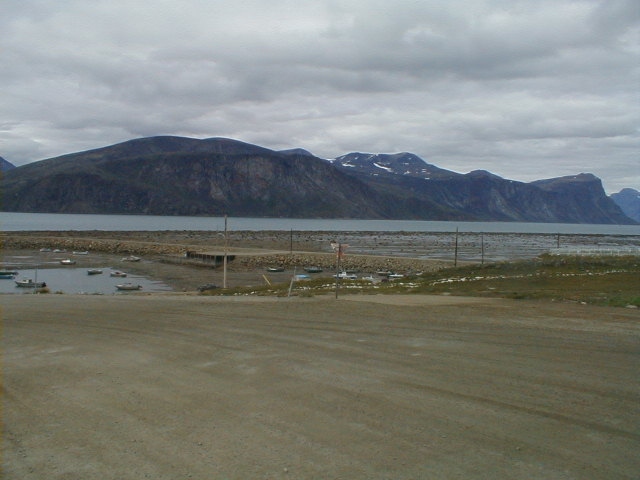
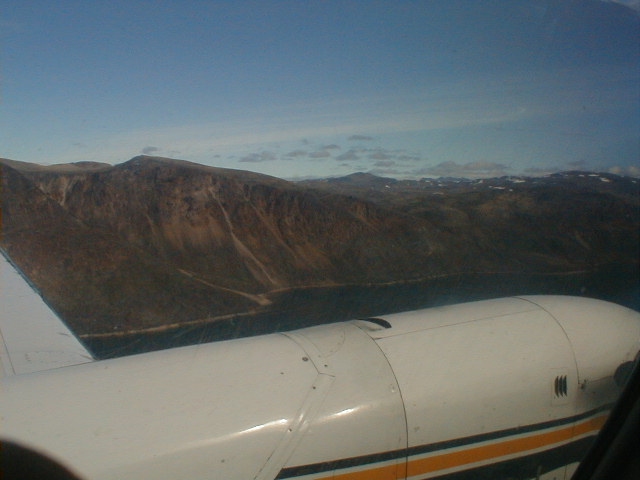
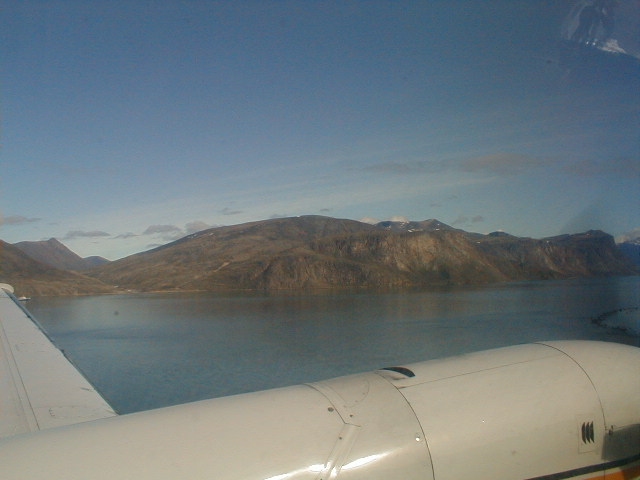
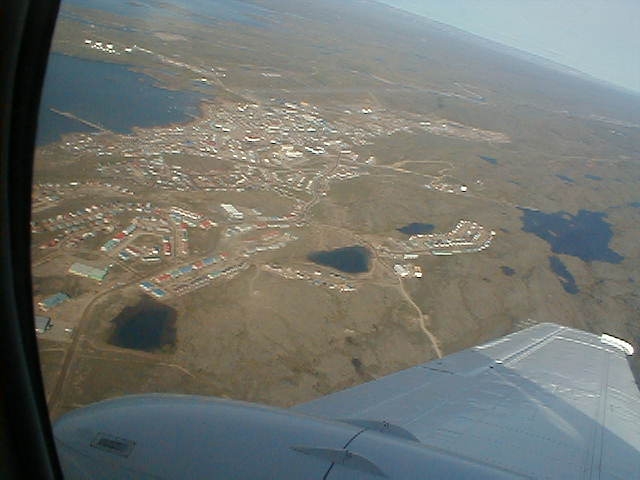
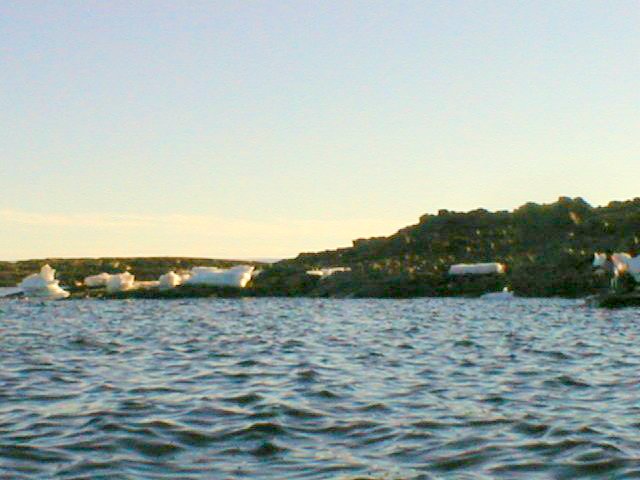
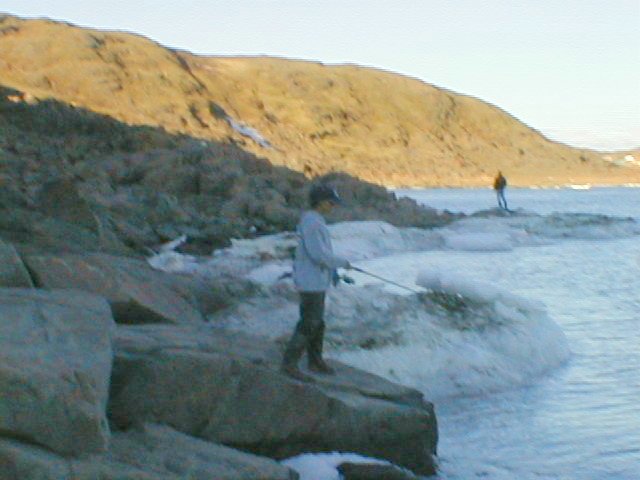
I had to go to Pangnirtung today. My job requires me to travel to remote parts of Nunavut on occasion. Today it was a trip to the gateway to the arctic circle. Pangnirtung has wonderful scenery and excellent fishing. I had to make sure that I brought my camera so that I could let the world see a glimpse of Nunavut.
Pangnirtung Fjord

Pangnirtung Fjord

Monday, August 01, 2005
global warming
It would seem that over the last 20 years that the arctic climate is indeed changing. The trend seems to be warmer summers, higher humidity and less intense cold in the winter. 20 years of warming has caused all the glaciers to receed. When flying over the mountainous regions of Baffin Island's east coast, one can see the dramatic glacial meltdown. All glaciers have moved back up into the higher altitudes where the summer heat remains below freezing.
Insects that have never been seen on Baffin Island are now becoming commonplace. Many believe that the insect's range has increased due to the warming trend. I on the other hand attribute the increase of non-native insects to an increase in the number of cargo ships comming to the territory. Every crate dropped onto the beach has insects inside from far away places. I had opened a crate and found several paper wasps. The wasps quickly dispursed out into the tundra. Now what is a paper wasp going to do 500 miles north of the tree line? Paper wasps need trees to make the paper that they build thier nests out of. Those insects are in for a surprise I thought. I was in for more of a surprise when 2 years later, I had found a wasp nest. A paper wasp nest. How did this small collony survive the brutal arctic winter? How did these insects build a paper nest in a treeless wasteland? I found the answer by looking around. The treeless tundra is not actually treeless. Several species of "tree" grow on the barrens. These trees grow slowly and creep along the ground growing upwards no higher than a few inches. Many "trees" grow such that they engulf rocks. They look as though they are grasping the rock like a wooden hand with twig fingers hanging onto a stone. These little dwarf trees take decades to grow but are easily unnoticed as thier size is never quite like thier southern cousins. It is the little trees that had provided the raw materials for the hardy wasps to build thier nest. I had observed a lone wasp chewing a trail along a twig of a rock grasping tree. I do not think that these insects will persist. I think that I had found a lone example of ferral wasps. The location was protected from the harsh wind and was somewhat artificially heated being near a building exhaust air duct.
Global warming has only been studied for a short time. We really do not know with any great accuracy, the natural fluctuations in average temperature of this planet Earth. We have not been around long enough to gather the data over the eons. The effects of "greenhouse gases" cannot be ignored but perhaps we overestimate the effect. This summer has been the coolest summer in decades here in this part of Nunavut. The hottest day this year so far has been a high of 18C. Last year we had several days of 25C to 28C highs. A sweltering temperature for people who spend most of thier year in freezing temperatures. Global warming is not as evident in the arctic this year. Maybe we are on the road back to cooler temperatures. Maybe a warming trend happens every thousand years or so. Maybe we are actually on the road to a new ice age. Ice age?
Well, I already live in an ice age. Sort of. With paper wasps.
Insects that have never been seen on Baffin Island are now becoming commonplace. Many believe that the insect's range has increased due to the warming trend. I on the other hand attribute the increase of non-native insects to an increase in the number of cargo ships comming to the territory. Every crate dropped onto the beach has insects inside from far away places. I had opened a crate and found several paper wasps. The wasps quickly dispursed out into the tundra. Now what is a paper wasp going to do 500 miles north of the tree line? Paper wasps need trees to make the paper that they build thier nests out of. Those insects are in for a surprise I thought. I was in for more of a surprise when 2 years later, I had found a wasp nest. A paper wasp nest. How did this small collony survive the brutal arctic winter? How did these insects build a paper nest in a treeless wasteland? I found the answer by looking around. The treeless tundra is not actually treeless. Several species of "tree" grow on the barrens. These trees grow slowly and creep along the ground growing upwards no higher than a few inches. Many "trees" grow such that they engulf rocks. They look as though they are grasping the rock like a wooden hand with twig fingers hanging onto a stone. These little dwarf trees take decades to grow but are easily unnoticed as thier size is never quite like thier southern cousins. It is the little trees that had provided the raw materials for the hardy wasps to build thier nest. I had observed a lone wasp chewing a trail along a twig of a rock grasping tree. I do not think that these insects will persist. I think that I had found a lone example of ferral wasps. The location was protected from the harsh wind and was somewhat artificially heated being near a building exhaust air duct.
Global warming has only been studied for a short time. We really do not know with any great accuracy, the natural fluctuations in average temperature of this planet Earth. We have not been around long enough to gather the data over the eons. The effects of "greenhouse gases" cannot be ignored but perhaps we overestimate the effect. This summer has been the coolest summer in decades here in this part of Nunavut. The hottest day this year so far has been a high of 18C. Last year we had several days of 25C to 28C highs. A sweltering temperature for people who spend most of thier year in freezing temperatures. Global warming is not as evident in the arctic this year. Maybe we are on the road back to cooler temperatures. Maybe a warming trend happens every thousand years or so. Maybe we are actually on the road to a new ice age. Ice age?
Well, I already live in an ice age. Sort of. With paper wasps.
Friday, July 15, 2005
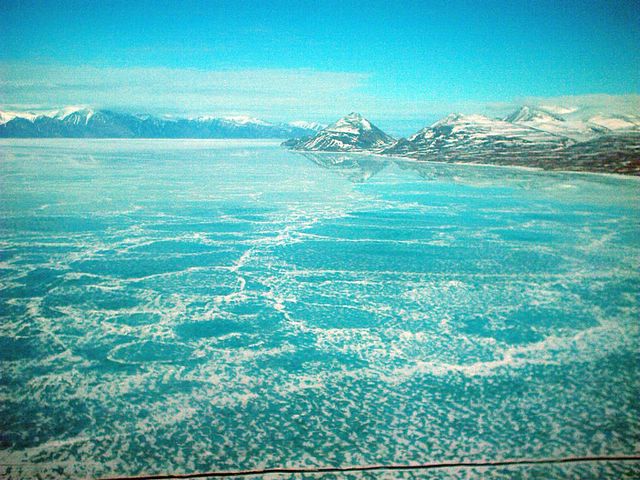
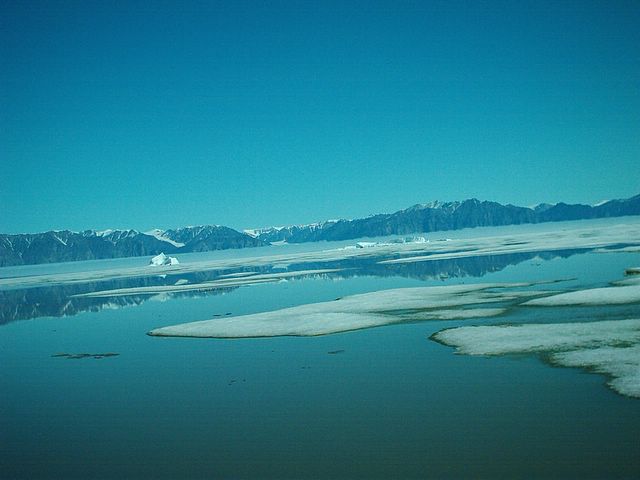
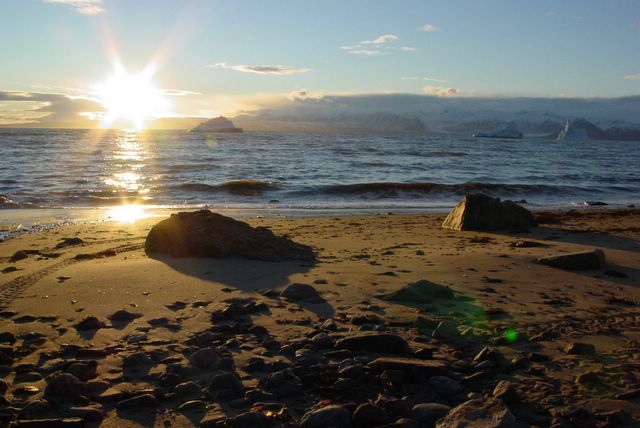
Sandy beach at the top of the world. Some of the "mountains" in the background are actually iceburgs. Here we see the sun setting. THe sun will not return in it's full glory for 6 months. The following weeks will become darker and darker untill 24 hours of darkness in December signify the official start of winter.

Thursday, July 14, 2005
Friday, July 01, 2005
The Sting
I have received many pieces of Email pertaining to bumble bees. Does the bee sting or not? A comment left on the site by Bill has indicated that bumble bees indeed sting and are capable of stinging multiple times. Most bees have a barbed stinger which imbeds into the victim which the bee is unable to extract. The bee will tear itself apart leaving the stinger and a pulsing venom sac behind. The bee perishes all for the good of protecting the colony. BIll has indicated to me that a true bumble bee has a smooth stinger and does not die after stinging.
So I have done some research. I was surprised to find that Bill is correct if we are talking about the female bumble bee. Here is a bit of information from an entomological web site dealing with bumble bee identification.
IDENTIFICATION
Bumble bees are large robust insects with black and yellow coloration. The bumble bee has a black or yellow hairy abdomen, which is a character that can be used to differentiate it from a carpenter bee, which has a black, shiny, hairless abdomen. The foraging bumble bee has a large pollen basket on each hind leg that is often loaded with pollen. The bumble bee queens are typically twice a large as workers or males. A female bumble bee has a pointed abdomen with a stinger. Males do not have a stinger and the tip of the abdomen is rounded.
So, Bill is correct (females) and so am I (males).
The foraging bees are female. They sting. I shall have to follow suit from now on and toss my golf clubs into the air running madly in circles screaming "Bee! Bee!" like the rest of the brave men of the arctic.
So I have done some research. I was surprised to find that Bill is correct if we are talking about the female bumble bee. Here is a bit of information from an entomological web site dealing with bumble bee identification.
IDENTIFICATION
Bumble bees are large robust insects with black and yellow coloration. The bumble bee has a black or yellow hairy abdomen, which is a character that can be used to differentiate it from a carpenter bee, which has a black, shiny, hairless abdomen. The foraging bumble bee has a large pollen basket on each hind leg that is often loaded with pollen. The bumble bee queens are typically twice a large as workers or males. A female bumble bee has a pointed abdomen with a stinger. Males do not have a stinger and the tip of the abdomen is rounded.
So, Bill is correct (females) and so am I (males).
The foraging bees are female. They sting. I shall have to follow suit from now on and toss my golf clubs into the air running madly in circles screaming "Bee! Bee!" like the rest of the brave men of the arctic.
Wednesday, June 29, 2005

Tuesday, June 28, 2005
Monday, June 27, 2005
Bee
Baffin Island has bees. The bee may not be a true bee but everyone here calls them bees. Most refer to them as bumble bees. I believe that a true bumble bee is not capable of stinging. The Baffin Island bee is said to sting although I have never seen anyone get stung. The bee is a large insect bee-ing about 3/4" long. It has a spikey look to it as the yellow and black hairs jut outward from it's abdomen. On occasion I will spot a bee that doesn't belong here. It would be an insect that was brought here on a ship or aircraft as a stow away. I had seen a paper wasp in Pond Inlet. Pond Inlet is far above the arctic circle and far above the treeline. I do not think that these insects will survive after being unwitingly brought to the arctic. Those insects need forested areas and warmer temperatures. The arctic bumble bee is right at home on the tundra.
I was curious to know what has been learned about the local bumble bees and was astonished to find many interesting facts. First of all, there are five species described for arctic bumble bees. They all fall into the subspecies of "alpinobombus". Bombus is such a suitable name for a bumble bee, somehow. Bombus polaris is probably what the little creatures that can be found here are called. There is also species of bombus hyperboreus, bombus balteatus and bombus neoboreus buzzing around. There certainly is lots of bombus among us.
I am pleased with my new found knowledge. As I walk about our home made Tundra golf course, I shall surely take note of whether 'tis a bombus polaris or a bomus hyperborialis buzzing 'bout. I will assert that the bee doesn't have a stinger and cannot harm a human as is true with bumble bees of the south. I know that the people here, that run away in fear, screaming "Bee! Bee!", will not believe me. There are many falsehoods attached to the bee. Honestly, I will never understand how some of the Inuit men I know, run frantically away from the little arctic bumble bee. These men, most who would brave an arctic blizzard to hunt down big game with nothing more than a spear, fear these insects. Why? The bee seems to be an arctic boogieman. Tales of eggs being laid in your ears or of larvae growning under your skin and other such heebiegeebie stories that make you go ewww. I only see a bee collecting pollen. An arctic bee.
I was curious to know what has been learned about the local bumble bees and was astonished to find many interesting facts. First of all, there are five species described for arctic bumble bees. They all fall into the subspecies of "alpinobombus". Bombus is such a suitable name for a bumble bee, somehow. Bombus polaris is probably what the little creatures that can be found here are called. There is also species of bombus hyperboreus, bombus balteatus and bombus neoboreus buzzing around. There certainly is lots of bombus among us.
I am pleased with my new found knowledge. As I walk about our home made Tundra golf course, I shall surely take note of whether 'tis a bombus polaris or a bomus hyperborialis buzzing 'bout. I will assert that the bee doesn't have a stinger and cannot harm a human as is true with bumble bees of the south. I know that the people here, that run away in fear, screaming "Bee! Bee!", will not believe me. There are many falsehoods attached to the bee. Honestly, I will never understand how some of the Inuit men I know, run frantically away from the little arctic bumble bee. These men, most who would brave an arctic blizzard to hunt down big game with nothing more than a spear, fear these insects. Why? The bee seems to be an arctic boogieman. Tales of eggs being laid in your ears or of larvae growning under your skin and other such heebiegeebie stories that make you go ewww. I only see a bee collecting pollen. An arctic bee.
Subscribe to:
Posts (Atom)